

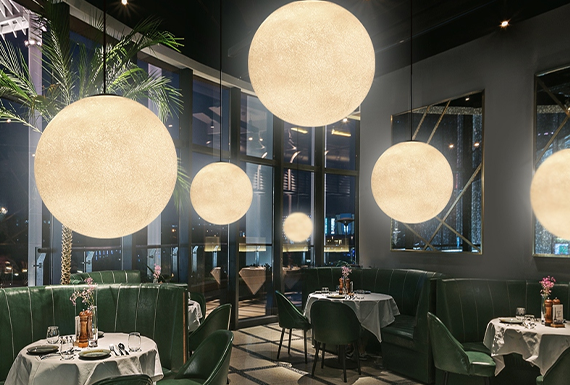
Whole-house customization, custom cabinets, wood customization and panel-based hotel room furniture have become essential concepts in modern interior design, residential decoration and hospitality projects.
This long-form guide explains how these solutions work, how panel materials are used, and how hotel owners, designers and contractors can plan customized furniture for rooms, suites and public areas.
Whole-house customization is a design and manufacturing approach in which all fixed and semi-fixed furniture in a space is planned as an integrated system.
It usually covers wardrobes, kitchen cabinetry, bathroom cabinets, TV walls, storage systems, interior doors, and sometimes beds, headboards and workstations.
In the hospitality industry, a similar concept is applied to hotel room furniture.
Instead of buying random ready-made products, developers specify a consistent set of custom cabinets and wood-based furniture items for:
This whole-room or whole-property customization allows better use of space, higher brand consistency and optimized cost per room, especially when using panel-based wood materials such as MDF, particle board, plywood and laminated panels.
To understand how whole-house customization and hotel furniture programs work, several core terms need to be clarified.
Whole-house customization refers to a comprehensive interior furniture solution where all major built-in and semi-built-in elements are designed, engineered, produced and installed as a coordinated system.
The concept includes:
In private homes this is often called “whole-house custom furniture”; in hospitality projects it may be named “unified room package,” “FF&E package” or “contract furniture program.”
Custom cabinets are made-to-order storage and functional units, manufactured according to specific measurements, design details and internal configurations.
Custom cabinets can be:
Custom cabinets are typically built with engineered wood panels because of their cost efficiency, stability, and flexibility in surface finishes.
Wood customization in this context means tailoring wooden or wood-based furniture to specific interior requirements.
It may involve:
For hotel projects, wood customization ensures that headboards, wardrobes, nightstands, desks and wall panels reflect the brand style while meeting practical performance requirements.
Panel materials are flat, manufactured board products commonly used in modern furniture:
These panel substrates are usually combined with decorative surfaces such as melamine paper, HPL (high-pressure laminate), PVC foil, wood veneer or lacquer.
A well-designed customization strategy offers significant benefits for both private homes and hospitality properties.
Whole-house customization and cabinet customization are applied differently in residential and hospitality environments, but the underlying technology and panel materials are similar.
In hotel rooms, the most common custom furniture elements made from wood panels include:
These items are usually grouped into a single “room package” and produced under unified specifications, allowing identical or mirrored layouts for each room type.
Selecting the right panel material is crucial for custom cabinets, whole-house solutions and hotel furniture.
Different substrates offer different combinations of cost, structural strength and surface quality.
| Panel Type | Typical Use | Key Advantages | Limitations | Relative Cost Level |
|---|---|---|---|---|
| MDF (Medium Density Fiberboard) | Doors, decorative panels, painted surfaces | Smooth surface, good for machining and painting, stable size | Moderate moisture resistance, heavier than particle board, not ideal for wet cores | Medium |
| Particle Board (Chipboard) | Cabinet carcases, shelves with melamine | Cost-effective, widely available, good for laminated finishes | Lower screw-holding strength, sensitive to water, edges need proper sealing | Low |
| Plywood | High-end cabinets, structural parts, moisture-prone areas | High strength-to-weight ratio, better moisture resistance, good screw-holding | More expensive, visible layers on edges need treatment | Medium to High |
| HDF (High Density Fiberboard) | Back panels, door skins, laminate flooring | Very dense, strong, smooth surface, good for lamination | Heavier, can be more brittle during machining | Medium |
| Blockboard / Multilayer Panels | Large wardrobe doors, long spans | Good rigidity, less warping, stable for larger sizes | Surface quality may vary, requires quality control | Medium |
Custom cabinets and hotel casegoods rarely reveal the raw panel.
Instead, they are finished with surface materials that determine the final appearance and performance:
| Surface Finish | Description | Visual Effect | Typical Application |
|---|---|---|---|
| Melamine (Laminated Board) | Decorative paper impregnated with resin, pressed onto panel | Realistic wood grain, solid colors, various textures | Cabinet carcases, wardrobe panels, hotel room furniture |
| HPL (High-Pressure Laminate) | Multi-layer paper and resin sheet bonded to substrate | Highly durable surface, wide pattern selection | High-traffic hotel furniture, desktops, counters |
| PVC / Foil Wrapping | Thermoformed film vacuum-pressed around MDF profiles | Seamless door profiles, classic or modern styles | Cabinet doors, decorative moldings |
| Natural Wood Veneer | Thin slice of real wood glued to panel surface | Premium natural look, can be stained and lacquered | High-end hotel casegoods, executive suites, feature walls |
| Painted / Lacquered Finish | Primed and sprayed MDF or similar substrate | Solid colors, matte or high gloss | Modern kitchens, minimalist hotel furniture |
Panel materials are particularly suitable for hotel room furniture because they provide good repeatability across large quantities while allowing customized design details.
Typical hotel casegoods made from panel-based systems include:
When designing hotel room furniture using panel materials, the following performance aspects should be considered:
| Furniture Element | Recommended Panel Type | Typical Thickness | Common Finish |
|---|---|---|---|
| Wardrobe Carcase | Particle board or MDF with melamine | 16–18 mm | Melamine wood grain or solid color |
| Wardrobe Doors | MDF, particle board, or blockboard | 18–25 mm | Melamine, veneer or PVC, sometimes mirror insert |
| Luggage Bench Top | Plywood, MDF or particle board with HPL | 18–25 mm | HPL or high-wear laminate |
| Desk / Worktop | MDF, particle board or plywood | 25–40 mm (or doubled edge) | HPL, veneer with lacquer or thick melamine |
| Headboard Panel | MDF or plywood | 18–25 mm | Veneer, melamine or upholstered panel in front |
| Bathroom Vanity Carcase | Moisture-resistant MDF, particle board, or plywood | 16–18 mm | Melamine or lacquer with sealed edges |
A systematic design and planning process is necessary to ensure successful whole-house solutions and hotel room furniture packages.
This section outlines typical technical parameters that can be applied to whole-house customization and hotel room furniture using panel materials.
Actual values depend on local building codes and performance expectations.
| Cabinet Type | Typical Height | Typical Depth | Notes |
|---|---|---|---|
| Wardrobe (Hinged Door) | 2200–2600 mm | 580–650 mm | Ensure depth for hangers; consider ceiling height |
| Wardrobe (Sliding Door) | 2200–2600 mm | 620–680 mm | Extra depth for sliding track system |
| Desk / Console | 750–760 mm (top height) | 450–650 mm | Legroom clearance for seated guests |
| Luggage Bench | 450–550 mm (top height) | 400–500 mm | Comfortable for opening suitcases |
| Bathroom Vanity | 800–850 mm (top height) | 450–550 mm | Coordinate with basin type and plumbing |
For healthy indoor environments, panel materials used in whole-house and hotel customization should comply with recognized emission standards:
Hardware is critical for the longevity and user experience of custom cabinets and hotel furniture.
| Hardware Type | Specification | Application |
|---|---|---|
| Hinges | Soft-close, 90–165 degrees opening angles | Wardrobes, bathroom cabinets, TV units |
| Drawer Slides | Full-extension, soft-close, load capacity matched to use | Nightstands, desk drawers, minibar cabinets |
| Hanging Rails | Oval or round tube, often with anti-slip features | Wardrobe hanging sections in hotel rooms |
| Handles and Pulls | Metal, integrated profiles or push-to-open systems | All visible doors and drawers |
| Leveling Feet | Adjustable for uneven floors | Kitchen cabinets, wardrobes, vanities |
Whole-house customization and hotel casegoods follow broader interior design trends while using the technical possibilities of wood panel materials.
The following tips help maximize the benefits of custom cabinets and wood customization while minimizing long-term maintenance issues.
Properly engineered panel-based furniture is widely used in hotels worldwide.
When correct substrates (such as high-quality particle board, MDF or plywood), robust hardware and durable surface finishes (such as HPL or high-grade melamine) are specified, panel furniture can withstand intensive commercial use.
Ready-made cabinets are produced in standard sizes and finishes, often resulting in unused space or design compromises.
Whole-house customization starts with the interior layout, aligning cabinet dimensions and functions with specific needs, including irregular corners and structural columns.
This approach offers better space utilization, integrated design and the ability to coordinate colors and materials through the entire property.
Moisture-resistant versions of MDF or particle board are commonly used, combined with sealed edges and suitable surface finishes such as melamine, laminate or lacquer.
In areas with very high humidity or direct water contact, plywood or other high-moisture-resistance substrates may be specified for added safety.
Modification depends on the design and modular system used.
If cabinets are planned using standard modular widths and heights, it is easier to add new units or replace doors and panels while keeping the same structure.
This is a common strategy in large hotel portfolios, where rooms are periodically refreshed without full replacement of all casegoods.
Wood customization allows hotel operators to translate brand values into tactile and visual experiences.
Specific panel colors, textures, door profiles and headboard designs can be standardized across properties, creating recognizable brand signatures.
At the same time, regional variations can be introduced with different veneers or accent panels to reflect local culture.
Whole-house customization, custom cabinets and wood customization using panel materials provide powerful tools for creating efficient, attractive and brand-consistent interiors in both residential and hospitality projects.
In hotel environments, panel-based furniture solutions for wardrobes, headboards, desks, TV walls and bathroom vanities provide a balance between design freedom, durability and cost control.
By understanding the properties of different panel materials, surface finishes, hardware options and design standards, architects, interior designers, hotel developers and homeowners can plan integrated solutions that maximize the usability and value of every square meter.
When combined with careful space planning, technical detailing and standardized modules, whole-house and whole-room customization form a solid foundation for comfortable, long-lasting and visually coherent interiors.

China's leading
manufacturer , serving
the global market with
premium quality
products.
Address: No.C6001-C6002 of C#building,
Eesy home, No.189,
Foshan avenue central Chancheng
district, Foshan city,Guangdong,China
Tel: +86-757-89920898
Whatsapp: +86-13802621530
Mobile Phone: +86-13802621530
Email:cfmosaic1@163.com
We are a professional service-oriented company specializing in high-end whole-house customization, hotel projects, and comprehensive solutions for office spaces.
The company does not have its own production system, but relies on long-term screening and cooperation with high-quality manufacturers and brand suppliers to provide customers with systematic and feasible space customization and engineering supporting services.
UNIHOME © ALL RIGHTS RESERVED. POWERED BY CLOUD LUCKY
Sitemap


This website uses cookies to ensure you get the best experience on our website.



 Phone
Phone
Comment
(0)